
Where to See Seals & Sea Lions in La Jolla (2026)
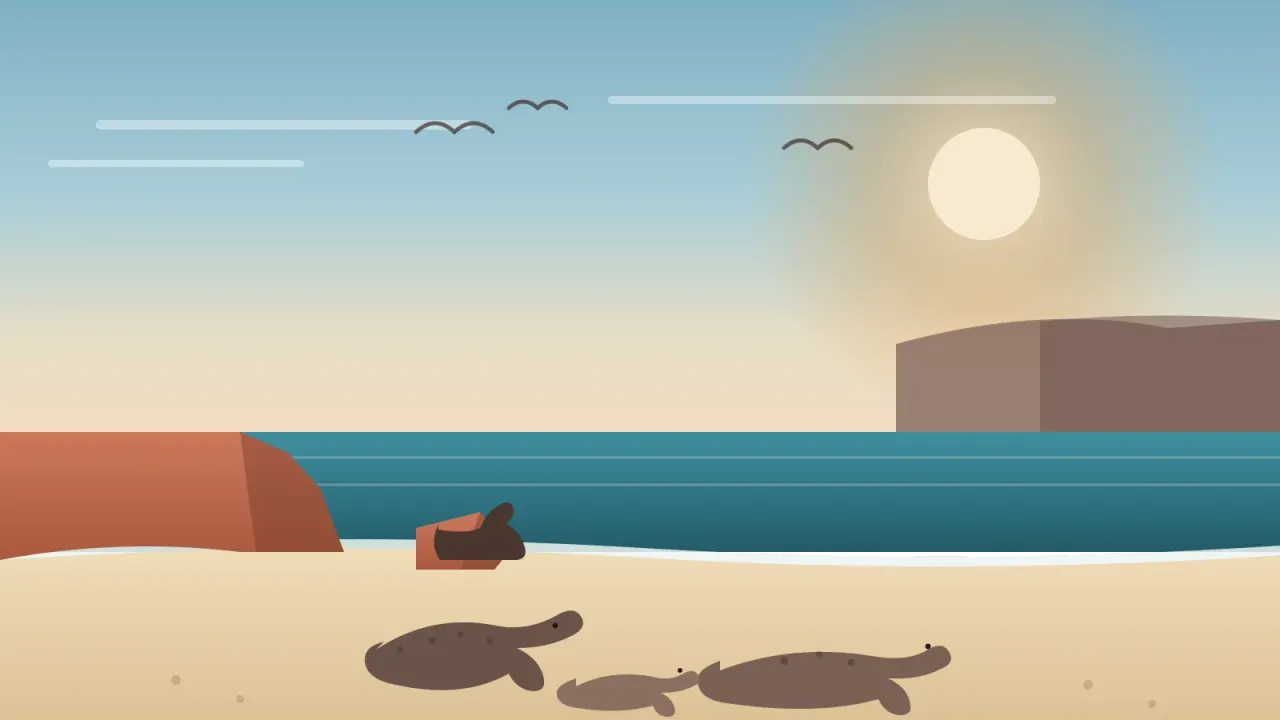
The best way to see seals and sea lions in La Jolla is to know that they are two different animals in two different spots, five minutes apart on foot. Harbor seals haul out on the sand at the Children’s Pool. California sea lions pile onto the rocks at La Jolla Cove just up the coast. After 25 years of walking this stretch of Coast Boulevard, we can tell you exactly where to stand, when they show up, which spot is closed and why, and how to watch them without earning a federal fine. Here is the whole picture, both animals, from a local who takes every out-of-town visitor here.
The short answer: Go to the Children’s Pool at the south end of Coast Boulevard for harbor seals on the sand, and to La Jolla Cove and Ellen Browning Scripps Park just north for California sea lions on the rocks. Both are free to view from the seawall and the bluff-top paths, no ticket or tour required. Come early morning or late afternoon on a weekday. The Children’s Pool beach is closed to people December 15 through May 15 for pupping season, and the rocky Point La Jolla is closed year-round, but you can see the animals from above at both.
La Jolla seals and sea lions at a glance
| Spot | Animal | Where | Best time | Access |
|---|---|---|---|---|
| Children’s Pool (Casa Beach) | Harbor seals | South end of Coast Blvd | Early morning, late afternoon | Beach closed Dec 15 to May 15; watch from the seawall |
| La Jolla Cove | Sea lions | Below Scripps Park | Morning to evening | Open; overlook and stairs |
| Ellen Browning Scripps Park | Both, from above | Bluff over the Cove | Anytime | Free, paved, accessible |
| Point La Jolla / Boomer | Sea lions | Rocks north of the Cove | Anytime | Closed year-round; view from the bluff |
| Seal Rock / Shell Beach | Seals and seabirds | Offshore near Children’s Pool | Anytime | View from the bluff path |
Seals or sea lions? How to tell them apart
People mix these up constantly, so here is the quick local cheat sheet. It also tells you which spot you are looking at.
- Sea lions have visible little ear flaps, they prop up and walk on large front flippers, and they bark, loudly and constantly. They are bigger and browner, and they pile on top of each other in noisy heaps. In La Jolla, that is the Cove and the point.
- Harbor seals have no ear flaps, just holes, and they cannot get their hind flippers under them, so on land they flop and inchworm along on their bellies. They are smaller, spotted, and quiet, with only soft grunts. They rest with a bit of space between them. In La Jolla, that is the Children’s Pool.
If it is barking and climbing on rocks, it is a sea lion. If it is lying still and spotted on the sand and looks like a fat, sleepy slug, it is a harbor seal.
1. Children’s Pool (Casa Beach): the harbor seals
This is the one people mean when they say they want to see the “seals” in La Jolla. The Children’s Pool is a small crescent beach behind a curved concrete seawall at the south end of Coast Boulevard, and it is home to a resident harbor seal colony. The Seal Conservancy estimates around 200 harbor seals use the area, with roughly 50 to 60 pups born each season. It is the only mainland harbor seal rookery recognized between the Mexican border and Ventura County, so this is a genuinely special place, not just a photo stop.
There is real history in that seawall. The philanthropist Ellen Browning Scripps paid to build it in 1931 to make a calm, protected wading spot for children, hence the name. The seals started hauling out and pupping here in the mid-1990s and effectively took the beach over, which set off years of lawsuits over whether it should be a swimming beach or a seal sanctuary. The seals won, in practice.
- Where: The south end of Coast Boulevard, La Jolla, behind the curved seawall (locals call it Casa Beach).
- Best time: Early morning or late afternoon into sunset, when the sand is cool and the most seals are hauled out. On the beach, seal numbers tend to peak from late April into early June.
- The local move: Walk out onto the curved seawall for the head-on view, but mind your footing, it gets narrow and slick. From December 15 to May 15 the beach itself is closed to people for pupping season, and you watch from the seawall and the sidewalk above instead, which is the better vantage anyway. The rest of the year a rope guides people away from the seals’ end of the sand. One heads-up: this area is famously pungent. That smell is real, and there is no fixing it.
2. La Jolla Cove and Scripps Park: the sea lions
A five-minute walk north brings you to La Jolla Cove and the sea lions, which are a completely different show. Where the harbor seals are quiet and shy, the sea lions are loud, social, and everywhere, barking and hauling out on the rocks and bluffs around the little Cove beach. The Sierra Club Seal Society estimates about 150 sea lions live here year-round, with the numbers swelling in the summer breeding and pupping season.
The best free viewing is from Ellen Browning Scripps Park, the grassy bluff-top lawn right above the Cove. You can stroll the paved coastal path, look down on the sea lions on the rocks, and stay at a safe and legal distance the whole time. This is also the most accessible option, since the lawn and promenade are flat and paved. Getting down the stairs to the small Cove beach itself is a different matter, with steps and uneven rock.
- Where: La Jolla Cove and Ellen Browning Scripps Park, along Coast Boulevard between the village and the Children’s Pool.
- Best time: Sea lions are around morning to evening; they thin out midday when many head out to fish. Sunset from the park lawn is a classic La Jolla evening, and pairs well with our guide to the best sunset spots in San Diego.
- The local move: Bring a zoom lens or good binoculars and watch from the bluff-top railings rather than scrambling down toward the animals. In summer you will see pups learning to swim, which is the best time to watch but also when the adults are most defensive.
3. Point La Jolla and Boomer Beach: closed, but still viewable from above
The rocky point between the Cove and Boomer Beach used to be the single best sea lion spot, where you could practically walk among them. It is now closed. The city closed Point La Jolla and the adjacent stretch of Boomer Beach to the public year-round starting in 2023, after a seasonal closure the year before. The California Coastal Commission signed off on it, the closure covers roughly 150 yards of coastline, and it was approved to run for seven years. A gate and signs now block the stairs down onto the point.
You have not lost the view, though. You can still watch the sea lions on the point from the bluff-top path and railings above, which is exactly where you should be watching from anyway. Entering the closed area gets you a citation.
- Where: The rocky point immediately north of Boomer Beach, between the Cove and Boomer, viewed from the coastal path above.
- Best time: Anytime; the sea lions haul out here around the clock.
- The local move: Do not hop the fence for a closer photo. This is the closure with teeth, and it exists because human disturbance was breaking up mother-and-pup pairs.
4. Seal Rock and the Sunny Jim Cave stretch
To round out the walk, a couple more spots along Coast Boulevard reward a look. Seal Rock is a small offshore island between Shell Beach and the Children’s Pool where seals and seabirds gather, easy to spot from the bluff path with a lens. And at the north end near Goldfish Point, the Sunny Jim Sea Cave (reached through the Cave Store at 1325 Coast Boulevard, admission required to descend the stairway) is worth the short detour, with sea lions sometimes lounging near the caves below. The paved path from the Cave Store down to the Children’s Pool passes every viewpoint in this guide and makes an easy self-guided loop of about 45 minutes to an hour with stops.
While you are down here at low tide, the rocky shelves are worth exploring too. See our guide to the La Jolla tide pools for timing, and in late summer the shallows off La Jolla Shores fill with the harmless leopard sharks of La Jolla.
5. Seeing sea lions from the water
You do not need a boat to see any of this, and we would never tell you to pay for a tour just to see the animals you can watch for free from the sidewalk. That said, a kayak or snorkel trip through the La Jolla sea caves and the ecological reserve is a great outing on its own, and you will very often meet sea lions cruising the kelp forest, plus garibaldi, rays, and the leopard sharks in season. If you would rather get in the water at the Cove, read our guide to snorkeling at La Jolla Cove first.
The rule does not change just because you are floating: keep your distance, and do not paddle toward, corner, or chase the animals. A curious sea lion may choose to come check you out, and that is fine. You approaching it is not.
The rules that keep you (and them) out of trouble
This is the part that matters, because the animals are federally protected and the enforcement here is real. Both harbor seals and sea lions are covered by the Marine Mammal Protection Act, and getting close enough to change their behavior, making them stare, fidget, bark, or flee, counts as harassment. That is a federal offense with civil penalties that run into the tens of thousands of dollars. In 2026 a man pleaded guilty to a federal violation for kicking a sea lion at the Cove, so this is not theoretical.
A few simple things keep you clear of all of it:
- Give them room. NOAA’s West Coast guidance is to stay at least 100 yards back, about the length of a football field. From the bluff paths and the seawall you are already fine.
- Never crowd a pup. The mother is usually close by and will read you as a threat. Blocking a pup from its mother is how pups end up abandoned.
- Keep it short and calm. Watch for a while, then move on. No feeding, no touching, no flushing them into the water for a reaction shot.
- Respect the closures. The Children’s Pool beach (December 15 to May 15) and Point La Jolla (year-round) are roped or gated for a reason. Entering gets you a citation on top of the federal rule.
There is a live local debate in 2026 about whether to add restrictions at the Cove itself, driven by a rough pupping season, so signage and rules can change. When something on the ground contradicts this guide, follow the signs and the lifeguards.
The trap to skip
The trap here is the selfie. Every summer, visitors climb down onto the rocks or the closed point to pose a few feet from a sea lion, and every summer some of them get charged, barked off, or bitten, because a bull sea lion defending pups is not a prop. Skip it entirely. The photos from the bluff-top path with a little zoom are better anyway, and you keep both your distance and your dignity. If you want a guaranteed close encounter with wildlife, that is what a kayak tour of the caves is for.
Getting there: parking and timing
Parking is the only genuinely hard part of a La Jolla seal trip. Here is how we handle it.
- Where to park: Coast Boulevard runs right alongside the Cove, Scripps Park, and the Children’s Pool, and those are the closest spots. They are mostly free with posted time limits, with a few paid or metered spaces mixed in. When Coast Boulevard is full, park up in the village along Girard Avenue or Prospect Street, or in a private village lot (roughly $5 to $20 for the day depending on the lot), and walk down.
- When to go: Arrive before about 9 or 10 a.m., especially on weekends. A weekday morning is the sweet spot for both parking and animal activity, since the seals like the cool early sand and the crowds have not shown up yet.
- What to bring: Binoculars or a zoom lens, water, and a little patience. There are restrooms and picnic tables at Scripps Park.
For a full day up here, from the shops on Prospect to the beaches and the best lunch spots, see our complete guide to things to do in La Jolla. If you are traveling with kids who will want a proper beach afterward, our roundup of the best beaches for families in San Diego covers the calm, lifeguarded options nearby. And to book a kayak trip, whale-watch, or other on-the-water outing, browse the recreation and tour listings in our local business directory.
Rules, closures, and the animals themselves move around, so when a detail really matters, check the City of San Diego page for that beach before you go. Everything here was current as we wrote it in September 2026.
Frequently asked questions
- Where can you see seals in La Jolla?
- The two spots are a five-minute walk apart along Coast Boulevard. Harbor seals haul out on the sand at the Children's Pool (Casa Beach) at the south end of Coast Boulevard. California sea lions pile onto the rocks at La Jolla Cove and the closed Point La Jolla just north of it. You watch the seals from the seawall and the sea lions from the bluff-top path in Ellen Browning Scripps Park. Both are free.
- What is the difference between the seals and sea lions in La Jolla?
- Sea lions have visible ear flaps, prop themselves up and walk on big front flippers, and bark loudly. They pile on top of each other on the rocks at the Cove. Harbor seals have no ear flaps, cannot rotate their hind flippers, so they flop and wriggle on their bellies, and they only grunt quietly. They rest a little apart from each other on the sand at the Children's Pool. Sea lions are bigger and browner; harbor seals are smaller and spotted.
- When is the best time to see seals in La Jolla?
- Early morning and late afternoon into sunset, when the sand is cool, are when the most harbor seals are hauled out at the Children's Pool. On hot summer days they often leave the beach by mid-morning and come back late in the day. The on-beach seal numbers tend to peak from late April into early June. Sea lions are at the Cove from morning through evening year-round. For parking and smaller crowds, go on a weekday morning.
- Is La Jolla Cove closed?
- As of when we wrote this in September 2026, La Jolla Cove itself is open. You can still visit the Cove beach, Scripps Park, and the overlooks and see sea lions. What is closed is the rocky Point La Jolla just north of the Cove, which the city closed to the public year-round in 2023 to protect the sea lions. There is an active 2026 debate about whether to also restrict the Cove, so check the latest before you go. The Children's Pool beach is separately closed to people from December 15 to May 15 each year.
- Is it free to see the seals and sea lions in La Jolla?
- Yes. Viewing the seals from the Children's Pool seawall and the sea lions from the Cove overlooks and Scripps Park is free public viewing with no ticket. Your only real cost is parking, which is the hard part on a summer weekend.
- How close can you get to the seals and sea lions?
- Keep your distance. Both are protected under the federal Marine Mammal Protection Act, and getting close enough to change their behavior counts as harassment, a federal offense. NOAA's West Coast guidance is to stay at least 100 yards back, roughly the length of a football field, keep well clear of pups, and never touch, feed, or chase them. Sea lions have bitten and charged people who crowded them.
- Do you need a boat or kayak tour to see them?
- No. The best viewing is free and from land, along Coast Boulevard. Kayak and snorkel tours of the La Jolla sea caves do often encounter sea lions in the kelp, and that is a great trip, but you do not need to pay for a tour just to see the animals. The same keep-your-distance rule applies on the water: do not paddle up to or corner them.
More San Diego guides

Best Easy Hikes in San Diego: 14 Flat Local Picks (2026)
The best easy hikes in San Diego from 25-year locals: flat, family and stroller-friendly trails with parking, hours, dog rules, and the steep ones to skip.

Secret Date Spots in San Diego: 16 Local Picks (2026)
Secret date spots in San Diego, from 25-year locals: a clifftop koi garden, a hidden cove overlook, a wobbly canyon bridge, and 13 more quiet places with parking, timing, and cost.
Things to Do in La Jolla: 16 Local Favorites (2026)
The best things to do in La Jolla from 25-year locals: the cove, sea caves, snorkeling with leopard sharks, Torrey Pines, plus where to park and eat.