
Leopard Sharks in La Jolla: When & Where to See Them (2026)
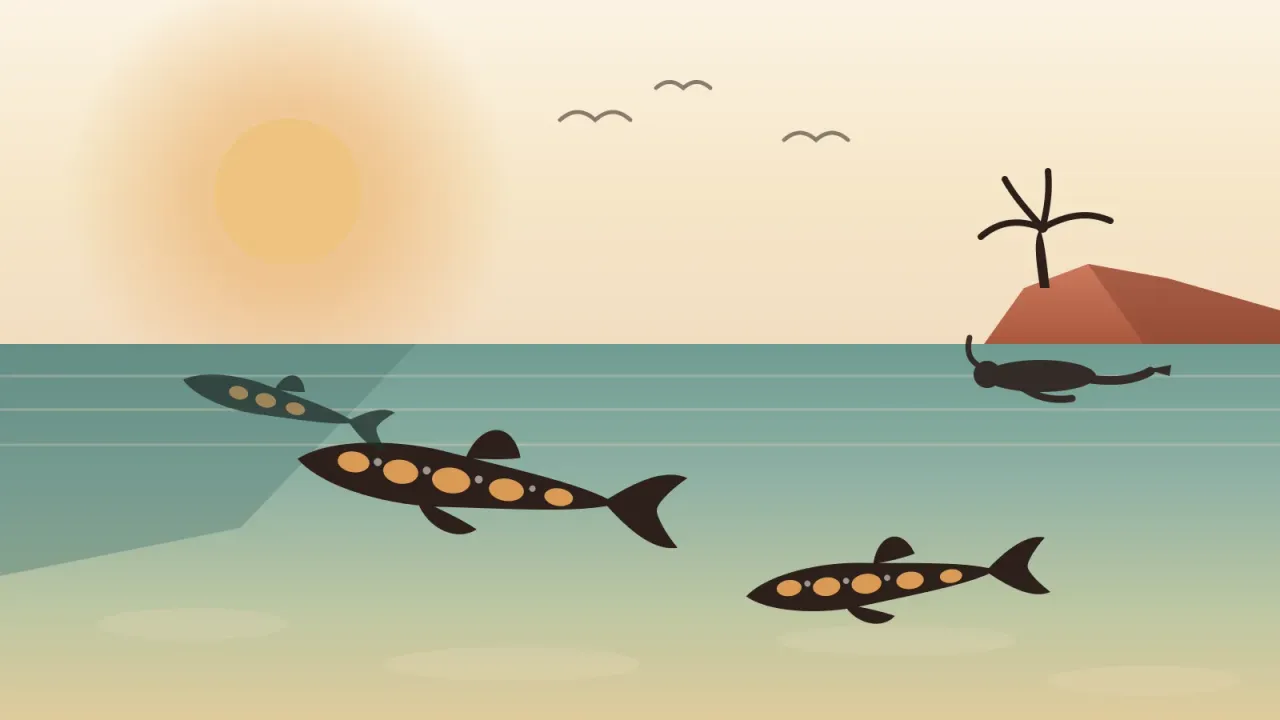
The leopard sharks at La Jolla are real, they are harmless, and from about June through December you can wade off the sand at La Jolla Shores and float over dozens of them without a boat, a guide, or a dollar spent. After 25 years here this is still one of our favorite things to take out-of-town family to do, because it sounds wild (“we swam with sharks”) and it is actually one of the gentlest, easiest ocean experiences in the city. Late summer is our favorite time to be in the water here, and the leopard sharks are one of the reasons.
Here is exactly when they show up, where to wade in, what it costs, and the one mistake that sends tourists to the wrong beach.
The season is just kicking off as we publish this. Water temps, surf, and tour prices shift through the season, so treat the numbers below as a starting point and check the surf and the operator’s own page before you go.
The short answer: Leopard sharks gather in the warm shallows at the south end of La Jolla Shores, roughly off The Marine Room restaurant, from about June through December, peaking in August and September. They are harmless bottom feeders. Park at Kellogg Park (free, arrive by 8 to 9 a.m.), walk south down the beach, and wade or snorkel out on a calm, low-tide morning. It is free with your own gear; guided snorkel tours run about $54 per person. Do not go to La Jolla Cove looking for them, they are at the Shores.
Leopard sharks in La Jolla at a glance
| Question | The local answer |
|---|---|
| When | June through December, peak August and September |
| Where | South end of La Jolla Shores, off The Marine Room |
| Cost | Free with your own gear; ~$54/person guided |
| Best time of day | Calm, sunny, low-tide morning |
| Dangerous? | No, harmless bottom feeders |
| Water temp | ~68 to 72°F in summer and fall |
| Parking | Kellogg Park lot, free, fills by 8 to 9 a.m. |
| Good for kids? | Yes, very |
When are the leopard sharks in La Jolla?
Leopard sharks gather in the shallows at La Jolla Shores from roughly June through December, and the peak is August and September. The season is just getting started in mid-to-late June, builds through July, and hits its high point in late summer when the water is warmest and there can be hundreds of sharks holding in the shallows at once.
If you have a choice, come in August or September. That is when the numbers are highest and your odds of floating over a big, slow-moving group are best. June and early July work too, there are just fewer of them, and by November and December the season is winding down.
The reason they show up is the water itself. The sharks that gather here are almost all pregnant females, and they use the warm, shallow water at the Shores to speed up a long gestation (leopard sharks carry their pups for 10 to 11 months). The deep La Jolla submarine canyon sits right offshore, so there is food close by, and the gentle, sandy shallows keep them away from bigger predators. They are basically using the Shores as a warm, safe maternity ward.
Where exactly are the leopard sharks at La Jolla Shores?
They congregate at the south end of La Jolla Shores, in the shallow water roughly off The Marine Room restaurant at 2000 Spindrift Drive. This is the single most important detail in this whole post, because the leopard sharks are not spread evenly down the beach. They cluster at the southern end.
Here is the move: park at Kellogg Park (the main La Jolla Shores beach lot off Camino del Oro), then walk south down the sand toward The Marine Room. As you get near the restaurant, look for clear, shin-to-waist-deep water over a sandy bottom. On a good morning you will see their shadows and the tips of their tails before you even get in. Wade out slowly and you will be standing in the middle of them.
This is also a beautiful, easy stretch of coast on its own. If you want to make a half-day of it, the wide sandy beach is a short drive from the tide pools and cliffs you will recognize from our roundup of the best sunset spots in San Diego, so it is easy to pair a morning of sharks with an evening on the water.
How to actually see them (and not scare them off)
You do not need to be a strong swimmer. The water where the sharks hold is waist-deep and stays shallow a long way out, so plenty of people see them just wading in up to their knees on a calm day. To really watch them, though, put on a mask, float face-down on the surface, and stay still.
- Float, don’t chase. The sharks are skittish. They will glide right under and around you if you hang quietly at the surface, and they will scatter the instant you kick toward them. Let them come to you.
- Shuffle your feet as you walk out. Round stingrays share this same sandy bottom, and the “stingray shuffle” (sliding your feet instead of stepping down) sends them swimming off before you step on one. This is the actual thing locals do here, every time.
- Go on a calm, sunny, low-tide morning. Calm water and low surf mean better visibility, sunlight makes the sharks easy to spot against the pale sand, and mornings are flatter and far less crowded than afternoons. A low tide also concentrates the sharks closer in.
- Bring a wetsuit or rash guard. The water is about 68 to 72°F in summer and fall, and because you are floating still instead of swimming hard, you get cold faster than you would expect. A wetsuit lets you stay out for an hour instead of ten minutes.
Are leopard sharks dangerous?
No. Leopard sharks are completely harmless to people, and that is the whole appeal. They are bottom feeders with small, downturned mouths built to vacuum up crabs, clams, worms, and fish eggs off the sand. They are not built to bite anything your size, and they are far more scared of you than you are of them.
They top out around 4 to 6 feet (a big one might push 7), weigh well under 50 pounds, and they bolt the second you move at them. There are no recorded leopard shark attacks on swimmers at La Jolla. You can stand in a group of a dozen of them and the only risk is that they will all swim away before your kid gets a good look. They are named for the gorgeous dark “leopard” saddles and spots down their backs, which is exactly what you will see gliding over the sand.
What it costs and where to rent gear
Seeing the leopard sharks is free if you bring your own mask and fins. No ticket, no boat, no guide. You walk down a public beach and wade in.
If you need gear or want a guide, the snorkel and kayak shops cluster on Avenida de la Playa, a block up from the sand (a stretch of outfitters like La Jolla Kayak and Bike and Kayak Tours sit around 2158 Avenida de la Playa). You can:
- Rent gear and DIY. Grab a mask, fins, and a wetsuit from one of the shops and walk down to the beach yourself. This is the cheapest way to do it with the full experience.
- Book a guided snorkel tour. Guided leopard shark snorkel tours run about $54 per person for roughly 50 minutes, with mask, fins, and wetsuit included, and they typically run daily through the season. There are also kayak-and-snorkel combo tours (around $79 per person, about 2.5 hours) that paddle the La Jolla coast and then snorkel. Prices shift through the season, so confirm on the operator’s page.
A guide is genuinely worth it if you want gear sorted, a wetsuit, and someone to point out what you are looking at. But to be clear: you do not need to pay anyone to see the sharks. For more outfitters, kayak tours, and dive shops, browse the water sports and tour listings in our business directory.
The tourist trap to skip: don’t go to La Jolla Cove
The most common mistake is driving to La Jolla Cove expecting leopard sharks. They are not there. The Cove is the small, rocky, postcard-famous spot about a mile south, inside the ecological reserve, and it is wonderful for orange garibaldi, sea lions, and reef snorkeling. But the leopard sharks want a sandy bottom, and that is La Jolla Shores, the big flat beach to the north.
So, to keep it straight: leopard sharks are at La Jolla Shores (wide sandy beach, gentle entry, south end by The Marine Room), while the garibaldi, sea lions, and sea caves are at La Jolla Cove and the reserve. Tourists burn a whole morning at the wrong beach because both say “La Jolla” and “snorkel.” Now you know better.
While you are floating at the Shores you will likely also see round stingrays, bat rays, shovelnose guitarfish, and the occasional sea lion cruising through. It is a genuinely rich little patch of ocean.
Is it kid-friendly?
Yes, this is one of the best ocean activities in San Diego for families. The water is shallow, the entry is a flat sandy beach with lifeguards, and kids can spot sharks just wading in on a calm low-tide morning. Bring each kid a properly fitting mask so they can put their face down, and teach them the one rule before they get in: float and watch, never splash, chase, or grab. It is the kind of thing they will talk about for the rest of the trip.
Kellogg Park, the grassy strip right behind the beach, has restrooms, outdoor showers, and room to spread out, so it works as a half-day base. Afterward, dry off and grab a coffee on your way out (our list of the best coffee shops in San Diego has the La Jolla picks), or build a bigger beach day around it the way we do in our Ocean Beach neighborhood guide.
Parking and timing at La Jolla Shores
Parking is the part that actually decides your morning. The Kellogg Park lot is free and closest to the sand, but it fills early. On a summer weekend you want to be parked by 8 a.m., and on a weekday by about 9 a.m. After that you are circling.
- Free lot: Kellogg Park / La Jolla Shores beach lot, off Camino del Oro. Free, fills first.
- Street parking: the residential streets nearby (El Paseo Grande, Avenida de la Playa, Camino del Oro) have free spots, but watch for posted time limits and fill up alongside the lot.
- The real fallback: on a peak August Saturday, parking is the hardest part of the whole trip. If you are coming from out of the area, an early arrival or a rideshare drop-off saves you a lot of circling.
Remember that La Jolla Shores sits inside the Matlahuayl State Marine Reserve, a protected area. The rule is simple and it matters: look, but don’t touch. It is unlawful to take, harass, or disturb the marine life, so no grabbing a shark for a photo, no chasing, no collecting. Float, watch, and let one of San Diego’s strangest, gentlest wildlife shows happen around you.
Plan it for a calm low-tide morning in August or September, get there early, shuffle your feet on the way in, and you will have one of the best free hours the San Diego coast gives away all year. When you’re done in the water, our roundups of what time the sun sets in San Diego and the best sunset spots in town will help you close out the day on the coast.
Frequently asked questions
- Are leopard sharks in La Jolla dangerous?
- No. Leopard sharks are harmless to people. They are bottom feeders with small, downturned mouths built to suck up crabs, clams, worms, and fish eggs off the sand, not to bite. They top out around 4 to 6 feet, weigh well under 50 pounds, and they spook and swim off the second you move toward them. There are no recorded leopard shark attacks on humans at La Jolla. You wade right into a group of them and they ignore you.
- What time of year can you see leopard sharks in La Jolla?
- Leopard sharks gather in the shallows at La Jolla Shores from roughly June through December, and the peak is August and September, when the water is warmest and there can be hundreds of them just off the sand. The season is just getting going in mid-to-late June, builds through summer, and tapers off in fall. Show up in August or September if you want the best odds.
- Where exactly are the leopard sharks at La Jolla?
- They congregate at the south end of La Jolla Shores beach, in the shallow water roughly off The Marine Room restaurant (2000 Spindrift Drive). Park at the Kellogg Park lot and walk south down the sand toward The Marine Room. They are at the Shores, the wide sandy beach, not at La Jolla Cove.
- Do you need a wetsuit to snorkel with leopard sharks?
- It is not required, but we recommend one. Summer and fall water at La Jolla Shores runs about 68 to 72 degrees, and you will be floating still on the surface watching the sharks rather than swimming hard, so you get cold faster than you expect. A wetsuit or at least a rash guard makes it comfortable enough to stay out for an hour. Wetsuits rent for cheap at the shops on Avenida de la Playa.
- Is it free to see the leopard sharks, or do you need a guided tour?
- It is completely free if you bring your own mask and fins. The sharks sit in waist-deep water you can wade or float right over, no boat or guide required. Guided snorkel tours exist (roughly $54 per person for about 50 minutes, gear included) and are worth it if you want gear, a wetsuit, and someone to point things out, but you do not need one to see the sharks.
- Can kids see the leopard sharks at La Jolla Shores?
- Yes, this is a great family activity. The water is shallow and calm enough that kids can spot sharks just wading in up to their knees and waist, especially on a low-tide morning. Bring a mask so they can put their face down. The only rule to teach them: float and watch, do not splash, chase, or try to touch the sharks.
More San Diego guides
Things to Do in La Jolla: 16 Local Favorites (2026)
The best things to do in La Jolla from 25-year locals: the cove, sea caves, snorkeling with leopard sharks, Torrey Pines, plus where to park and eat.

Dog-Friendly Hikes in San Diego: 12 Trails Locals Love
The best dog-friendly hikes in San Diego, from shaded canyons to lagoon loops, with leash rules, parking, and the summer heat cautions that really matter.

Things to Do in San Diego at Night (Beyond the Bars)
A local's guide to things to do in San Diego at night beyond the bars: skyline views, night walks, live music, drive-in movies, beach bonfires and late eats.