
Snorkeling La Jolla Cove: What You'll Really See
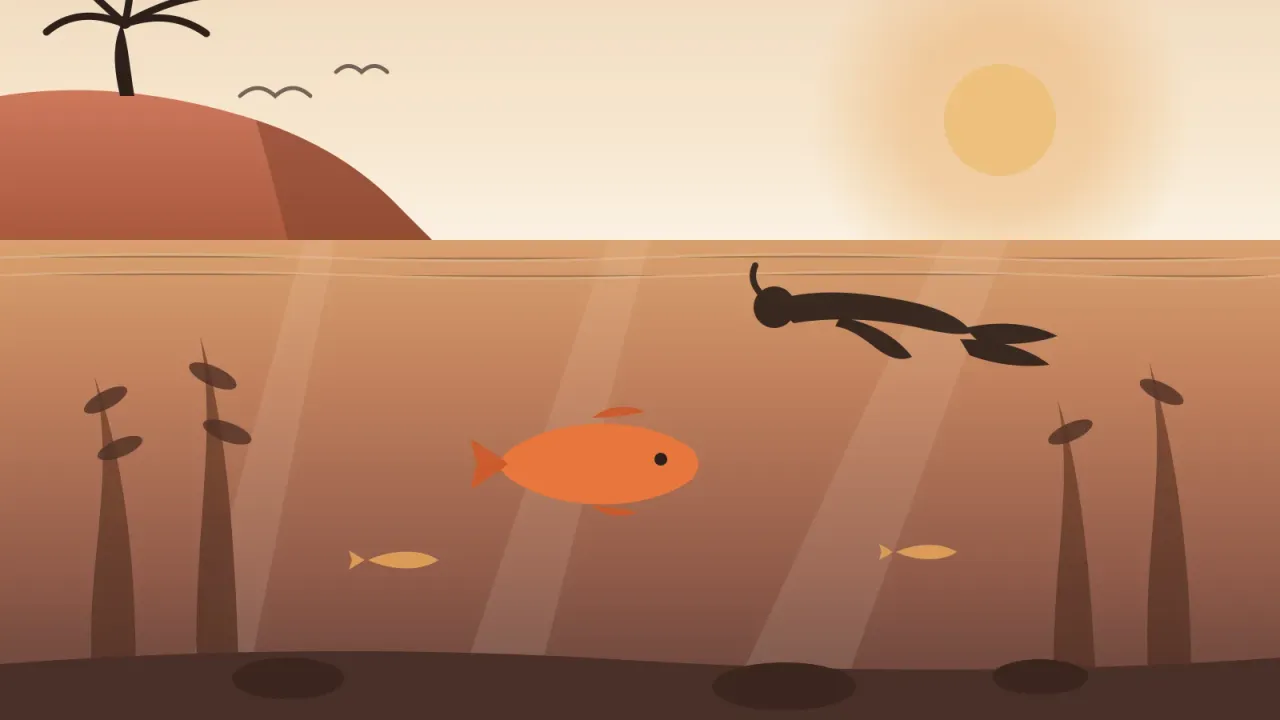
Snorkeling La Jolla Cove drops you into the richest patch of protected reef in the city, where bright orange garibaldi hang in the kelp, sea lions torpedo past, and on a clear morning you can see 30 feet down. That’s the payoff. The part nobody warns you about is the entry: the Cove is a small pocket beach with real shorebreak and surge, so it rewards a confident swimmer and a calm morning, not a midday walk-up on a windy afternoon.
We’ve lived in San Diego for 25 years, and the Cove is where we send people who want to see something underwater, not just splash around. It sits inside the San Diego-La Jolla Underwater Park Ecological Reserve, a no-take zone since 1970, which is the whole reason the fish are thick and unbothered by you. Here’s exactly what you’ll see, when to go, where to get in, where to park (the real problem), and the safety stuff that matters around the sea lions.
The short answer: Snorkel La Jolla Cove on a calm summer or early-fall morning, before the afternoon wind. You’ll see garibaldi, a kelp forest, bat rays, reef fish, and sea lions inside a protected reserve, with visibility around 15 to 30 feet. It’s free with your own mask, fins, and wetsuit; enter from the pocket beach below Ellen Browning Scripps Park at 1100 Coast Blvd. Park free on Coast Blvd (before 8 a.m.) or a paid Prospect Street lot. It’s a surge-prone entry for confident swimmers; beginners should snorkel La Jolla Shores next door instead. Look, don’t touch: it’s a no-take reserve, and give the sea lions a wide berth.
Snorkeling La Jolla Cove at a glance
| Question | The local answer |
|---|---|
| Where to get in | Pocket beach below Ellen Browning Scripps Park, 1100 Coast Blvd |
| What you’ll see | Garibaldi, kelp forest, bat rays, reef fish, sea lions |
| Best time of day | Calm morning, before the afternoon onshore wind |
| Best season | Late summer to fall (warmest, clearest water) |
| Water temp | ~upper 60s°F summer, ~upper 50s°F winter (wetsuit most of year) |
| Visibility | Roughly 15 to 30 feet on a settled day, up to 40+ |
| Cost | Free with your own gear; guided tours available |
| Skill level | Confident swimmer (surge-prone entry) |
| Beginners? | Start at La Jolla Shores instead |
Where to get in the water: the Cove vs La Jolla Shores
The single decision that shapes your morning is which beach you snorkel. They’re a mile apart, both say “La Jolla,” and they are not the same experience.
La Jolla Cove is the small, dramatic pocket beach tucked below the bluff at Ellen Browning Scripps Park (1100 Coast Boulevard). You walk down to a little strip of sand and wade in. It’s the heart of the ecological reserve, so the marine life is concentrated and the visibility is the best in the area, but the entry is known for waves breaking quick in shallow water, and the surge and shorebreak can shove you around. It’s the better spot for a confident swimmer who’s comfortable timing a wave set.
La Jolla Shores is the wide, flat, sandy beach about a mile north, and it’s the gentler, more forgiving option: an easy walk-in over sand, calmer surf, a big beach with lifeguards, and the launch point for basically every guided snorkel and kayak tour. It’s also where the leopard sharks gather in summer, off the south end by The Marine Room.
| La Jolla Cove | La Jolla Shores | |
|---|---|---|
| Entry | Pocket beach, surge and shorebreak | Wide sandy beach, gentle walk-in |
| Best for | Confident swimmers, densest reef life | Beginners, families, tours |
| Marine life | Garibaldi, kelp forest, sea lions, reef fish | Leopard sharks, rays, sandy-bottom fish |
| Parking | Coast Blvd street, Prospect paid lots | Kellogg Park free lot |
Our rule of thumb: if it’s your first time snorkeling or you’ve got young kids, start at the Shores. If you want the fullest version of the reserve and the water is calm, snorkel the Cove.
What you’ll see snorkeling at La Jolla Cove
The Cove earns its reputation because it’s a protected reserve, so the fish don’t scatter the way they do where people fish. Here’s what shows up on a good morning.
1. Garibaldi (the bright orange state fish)
The garibaldi is the reliable star of a La Jolla Cove snorkel, a vivid orange damselfish that grows up to about 14 inches and hangs right in the kelp and rocks. It’s California’s official state marine fish, named back in 1995, and it’s fully protected, so it’s illegal to take one anywhere in California waters. Because nobody’s been fishing them for decades, they’re bold: they’ll hold their ground and cruise close instead of bolting. You’ll see several on any clear day, and the electric orange pops even in so-so visibility. Juveniles carry iridescent blue spots that fade as they grow, so if you spot a smaller one flecked with blue, that’s a young garibaldi.
2. California sea lions
Sea lions are the Cove’s other headliner, and they haul out on the rocks around the point in big numbers year-round. Point La Jolla is described as the only sea lion rookery on the mainland California coast, meaning they mate, birth, and rest right here. In the water they’re fast, curious, and often blow right past you. They’re wonderful to watch and also the reason for the biggest set of rules on this list (see the safety section below): the bluffs at Point La Jolla and part of Boomer Beach are closed to people year-round, and you keep your distance in the water too.
3. The kelp forest
Snorkeling the Cove means floating over a genuine giant kelp forest, the tall amber canopy that reaches from the seabed toward the surface. Giant kelp and feather boa kelp both grow through the reserve, and the canopy is what holds the whole ecosystem, giving the fish cover and food. From the surface you drift over the tops of it and look down through the stalks, which is where a lot of the reef fish and rays are hiding. Don’t grab or pull it; besides being a reserve, kelp is slick and you can tangle in it if you fight it. Float over, look down, let it sway.
4. Bat rays, reef fish, and the rest
Beyond the two headliners, the reserve is stocked with the supporting cast: bat rays gliding over the bottom, kelp bass (calico bass), señorita, round stingrays on the sand, and now and then an octopus or a spiny lobster wedged in a crevice. Shovelnose guitarfish turn up too. None of it is guaranteed on a single swim, but the more clear the water and the calmer the morning, the more of it you’ll pick out. This is the difference a reserve makes: the fish are here because it’s illegal to take them, and it shows.
5. Leopard sharks (but they’re at the Shores)
Here’s the one that trips people up. The famous La Jolla leopard sharks, the harmless bottom feeders you can wade out among by the hundreds, do not school at the Cove. They gather over the sandy shallows at La Jolla Shores, roughly off The Marine Room, from about June through December, peaking in August and September. The Cove is rocky reef and kelp; the sharks want warm, sandy flats. If seeing them is your goal, read our full guide to the leopard sharks at La Jolla Shores and go there instead. You can easily do both in one morning, they’re only a mile apart.
When is the best time to snorkel La Jolla Cove?
Go early, on a calm day, in late summer or fall. Those three things stack the odds in your favor more than anything else.
- Time of day: morning. The water is glassiest in the morning before the afternoon onshore wind kicks up, and calm water means better visibility and an easier entry. By early afternoon the surface texture and the wind chop cut how far you can see.
- Season: late summer through fall. Roughly August through October is when the water is warmest, into the upper 60s, and typically at its clearest as the swells settle. Summer mornings can start under a gray marine layer (our local June Gloom that lingers into July), but it usually burns off and the water underneath is still worth getting into.
- Visibility: chase the calm. On a settled day, expect roughly 15 to 30 feet of visibility, sometimes 40 or more on the clearest fall mornings. What ruins it is swell, storm runoff after rain, and the occasional algae bloom or red tide. If it rained yesterday or a big swell just hit, give it a day.
Winter snorkeling is doable, the reserve doesn’t close, but the water drops into the upper 50s and you’ll want a thicker wetsuit and a calm-day forecast.
What gear you need
A mask, snorkel, fins, and a wetsuit are the kit, and the wetsuit is the one people underestimate. San Diego water is colder than it looks. A 3/2mm wetsuit covers you comfortably for most of the year here, and you’ll want something thicker in the dead of winter. In the warmest few weeks of late summer some people snorkel in just a rash guard, but because you float still on the surface instead of swimming hard, you get cold faster than you’d think, so the wetsuit lets you stay out for an hour instead of ten minutes.
One important rule specific to the Cove: no flotation devices, boards, or kayaks are allowed in the Cove swim area, and lifeguards enforce it. Snorkeling and swimming are fine; a boogie board or an inflatable is not.
Do you need a tour, or can you snorkel for free?
Snorkeling the Cove is completely free if you bring your own gear and walk down from the park. No ticket, no boat, no guide.
If you want gear sorted or a guide to read the conditions, La Jolla is stacked with outfitters, most of them working out of La Jolla Shores. Everyday California (the longtime Shores shop that used to be OEX), La Jolla Kayak, and Bike and Kayak Tours La Jolla all run guided snorkel trips and kayak-plus-snorkel tours that paddle the coast toward the sea caves and then get in the water. A guide is genuinely worth it if you want a wetsuit and gear included and someone who knows whether today’s conditions are any good. Tour prices shift through the season, so book directly on the operator’s page rather than trusting a number in any article. To line up rentals, guided snorkels, or a kayak trip, browse the water sports and tour listings in our business directory.
Parking at La Jolla Cove
Parking is the part that decides your morning, because La Jolla village parking is genuinely tight and the enforcement is ruthless.
- Free street parking on Coast Boulevard and the surrounding streets by the park, with 2 to 3 hour limits on most blocks. It fills before 8 a.m. on weekends and summer days. The limits generally lift around 6 p.m., which is why evenings are easier, and the further south you drift from the Cove, the better your odds of a spot.
- Paid lots on Prospect Street are the fallback: the La Jolla Financial Building at 1200 Prospect (you reach the water by the stairway on the north side of the La Valencia Hotel) and the valet at 1250 Prospect. Rates vary, so check the posted price when you pull in.
- Watch the posted limits. The parking attendants here ticket fast and often, so don’t gamble on a 2-hour block for a 3-hour swim-and-dry.
If you’re pairing the Cove with the leopard sharks at the Shores, note that the Shores has its own free lot, Kellogg Park off Camino del Oro, which also fills early (gates run 4 a.m. to 10 p.m.).
The trap to skip: don’t show up at midday on a windy, post-swell afternoon
The most common way to waste a La Jolla Cove snorkel is to roll up at 2 p.m. on a breezy afternoon the day after a swell, fight the shorebreak, get in murky water, see nothing, and leave thinking it’s overrated. It isn’t. You just went at the worst possible time. The Cove is a completely different place at 8 a.m. on a glassy fall morning than it is on a churned-up windy afternoon.
The second trap is the beach mix-up: driving to the Cove expecting leopard sharks, or driving to the Shores expecting the garibaldi-and-kelp reef. Keep it straight: the Cove is reef, kelp, garibaldi, and sea lions; the Shores is sandy-bottom, gentle entry, and leopard sharks. Both are La Jolla, both say snorkel, and people burn a morning at the wrong one.
Safety and the reserve rules
Two things carry real weight at the Cove: the reserve rules and the sea lions.
It’s a no-take reserve. The whole area is the San Diego-La Jolla Underwater Park Ecological Reserve, and the core is the Matlahuayl State Marine Reserve, where it’s unlawful to injure, take, or possess any living, geological, or cultural resource. That means no fishing, no collecting shells or rocks, no touching or prying anything off the reef. Look, don’t take. It’s exactly why the fish are so thick, so it’s worth protecting.
Give the sea lions a wide berth. They look mellow, but they’re big wild animals and they can bite, especially during pupping season (roughly May through October) when they’re most protective. The posted guidance is to stay back at least 50 feet, and more is better. On land, Point La Jolla and part of Boomer Beach have been closed to people year-round since September 2023, with citations for entering, so don’t climb out onto their rocks for a photo. In the water, if one swims up to you, stay calm, hold still, and let it pass; don’t chase it or get between an adult and a pup. Harassing them also breaks federal law under the Marine Mammal Protection Act.
The Cove is lifeguarded, with a tower staffed year-round (hours vary by season, roughly 9 a.m. to sunset), so if you’re unsure about the surf or the currents on a given morning, ask them before you get in. That’s what they’re there for.
Once you’ve had your morning in the water, it’s easy to build a full coast day around it. Our guide to the La Jolla tide pools covers the low-tide spots a short walk south, our roundup of the best tide pools across San Diego maps the Point Loma and North County reefs, and our picks for the best sunset spots in San Diego will help you close out the evening on the water. Pick a calm morning, respect the reserve, keep your distance from the sea lions, and the Cove gives you one of the best underwater hours in the city, for the price of your own gear.
Frequently asked questions
- Is snorkeling La Jolla Cove worth it?
- Yes, if you go on a calm morning and you're a confident swimmer. La Jolla Cove sits inside the San Diego-La Jolla Underwater Park Ecological Reserve, a protected no-take zone, so the marine life is genuinely thick: bright orange garibaldi that ignore you, a kelp forest, bat rays, reef fish, and California sea lions cruising through. Visibility on a settled day runs roughly 15 to 30 feet and can top 40. The catch is the entry, which is a small surge-prone pocket beach with shorebreak, so it rewards decent ocean comfort. Beginners are better off at La Jolla Shores next door.
- What will you see snorkeling at La Jolla Cove?
- The reliable star is the garibaldi, California's bright orange state marine fish, which is protected and unafraid of snorkelers, so you'll see several on any clear day. You'll also swim over a giant kelp forest and past kelp bass, señorita, bat rays, round stingrays, and the occasional octopus or lobster tucked in the reef. California sea lions haul out on the rocks at the Cove and often swim right past you in the water. Leopard sharks are a La Jolla thing too, but they gather at La Jolla Shores next door, not at the Cove.
- When is the best time to snorkel La Jolla Cove?
- Go early on a calm summer or early-fall morning. Mornings are glassy before the afternoon onshore wind chops up the surface and drops visibility, and late summer through fall (roughly August through October) brings the warmest, clearest water of the year, with temps in the upper 60s. Avoid the day after a big swell or a heavy rain, when runoff and churn cloud the water. Winter water dips into the upper 50s, so it's a wetsuit season.
- Do you need a tour to snorkel La Jolla Cove, or can you go for free?
- It's free if you bring your own mask, snorkel, fins, and a wetsuit and walk down to the Cove yourself from Ellen Browning Scripps Park. No ticket, no guide. Guided snorkel tours and kayak-plus-snorkel trips out to the sea caves do exist, run by La Jolla outfitters like Everyday California, La Jolla Kayak, and Bike and Kayak Tours, and they're worth it if you want gear, a wetsuit, and someone to read the conditions for you. Prices shift through the season, so book directly on the operator's page.
- Where do you park for La Jolla Cove?
- There's free street parking along Coast Boulevard and the nearby streets by Ellen Browning Scripps Park, with 2 to 3 hour limits on most blocks. It fills before 8 a.m. on weekends and summer days, and the parking enforcement here is aggressive, so watch the posted limits. There's no free Cove lot; the closest paid options are on Prospect Street (the La Jolla Financial Building at 1200 Prospect and the valet at 1250 Prospect). The time limits generally end around 6 p.m., so evenings are easier.
- Is La Jolla Cove or La Jolla Shores better for snorkeling?
- La Jolla Cove has the denser marine life and better visibility because it's the reef-and-kelp reserve, but the entry is a surge-prone pocket beach for confident swimmers. La Jolla Shores is the wide, sandy, gentle-entry beach a mile north, which is far better for beginners and families, is where the guided tours launch, and is where the leopard sharks gather in summer. If it's your first time in the ocean with a mask, start at the Shores; if you want the fullest reserve show, snorkel the Cove on a calm morning.
More San Diego guides
Where to See Seals & Sea Lions in La Jolla (2026)
Where to see seals and sea lions in La Jolla from 25-year locals: harbor seals at Children's Pool, sea lions at the Cove, plus timing, parking, and the rules.

Best Easy Hikes in San Diego: 14 Flat Local Picks (2026)
The best easy hikes in San Diego from 25-year locals: flat, family and stroller-friendly trails with parking, hours, dog rules, and the steep ones to skip.

Secret Date Spots in San Diego: 16 Local Picks (2026)
Secret date spots in San Diego, from 25-year locals: a clifftop koi garden, a hidden cove overlook, a wobbly canyon bridge, and 13 more quiet places with parking, timing, and cost.